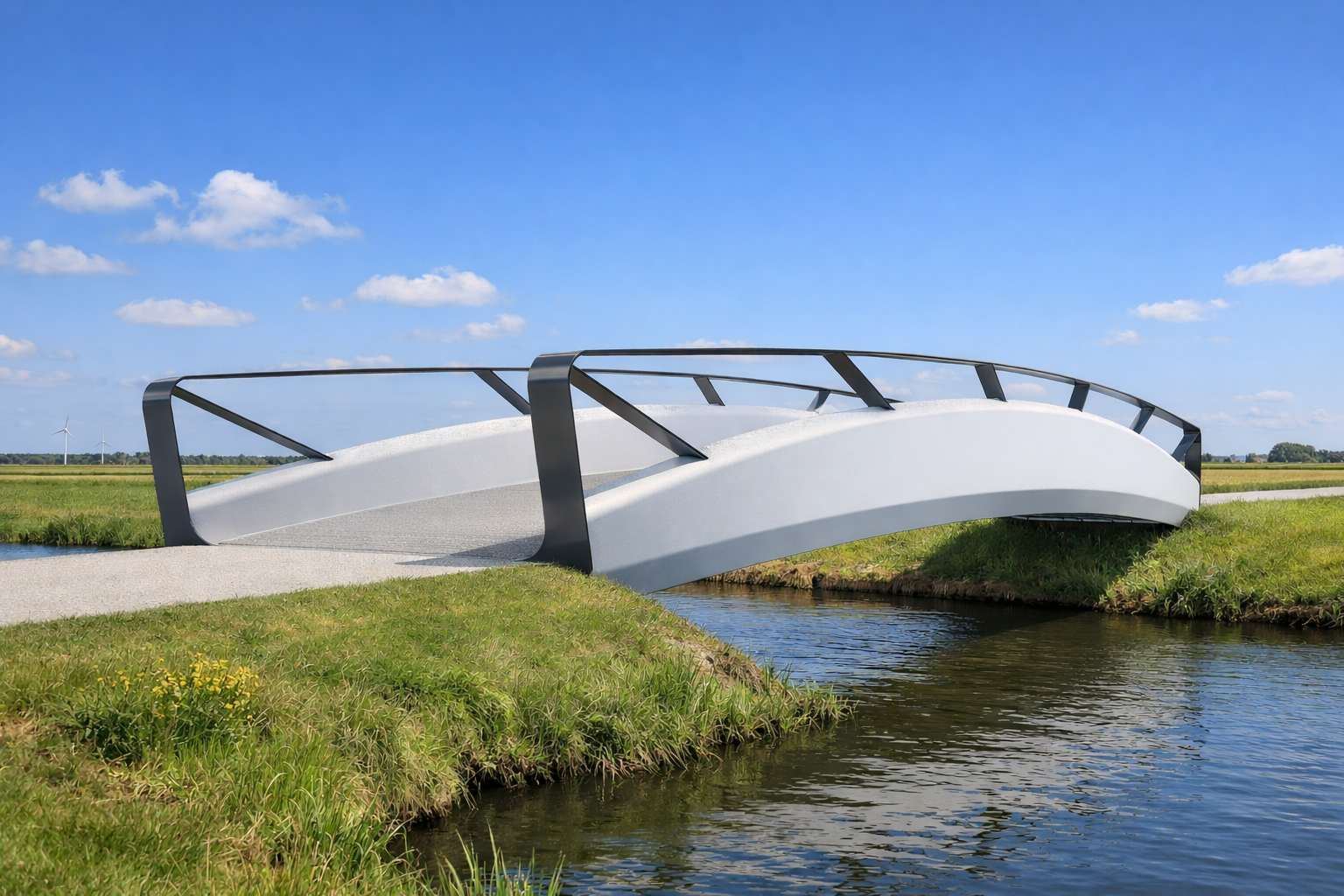

Impression of a MAGGAI bridge over a polder ditch

3D-printed bridges made from recycled waste.

Bridges up to 15 metres, made to measure for every site: a 3D-printed superstructure of recycled plastic on a steel substructure.

Thousands of small bridges are due for replacement. We make that circular, fast and scalable.

15metres

Maximum span, at a width of up to 3.5 metres.

8days

Print time per bridge, where custom work now takes months.

1design

Adapts to every site, without additional engineering.

M15. One design, for every size.

A cycle and pedestrian bridge up to 15 metres long and 3.5 metres wide. The design is adaptive: we match length and width to the site, and the structure and printing process adapt automatically. Every site gets a bridge made to measure, without additional engineering.

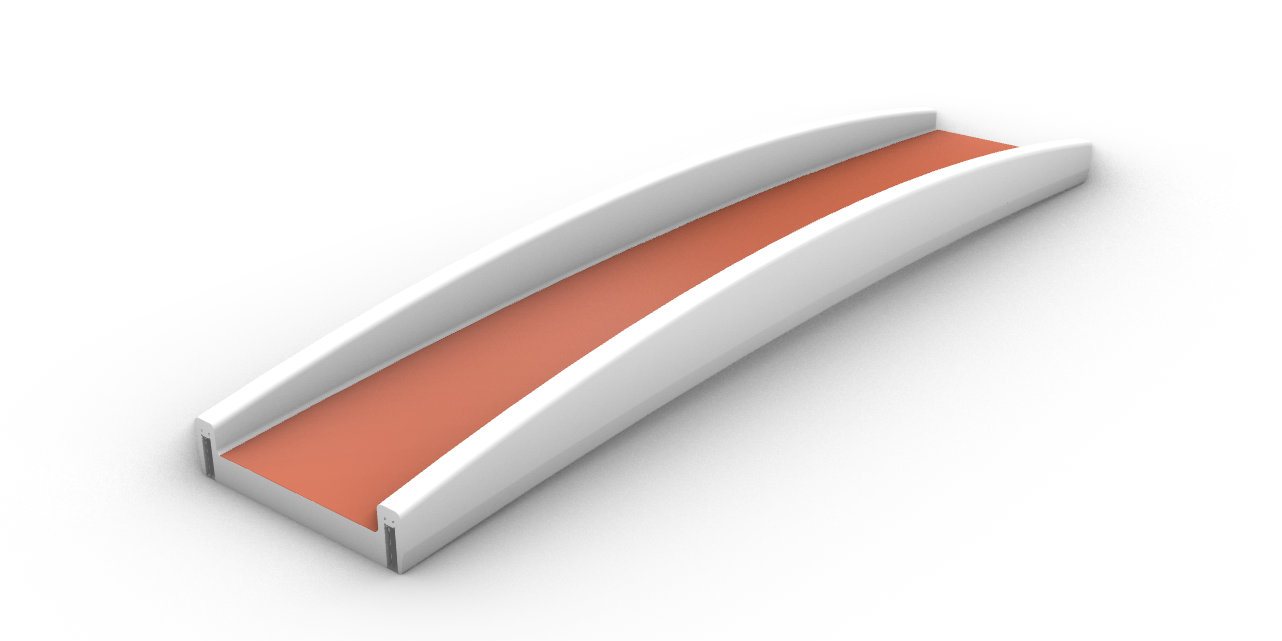
Render of the M15: printed superstructure with walking deck
3D-printed superstructure
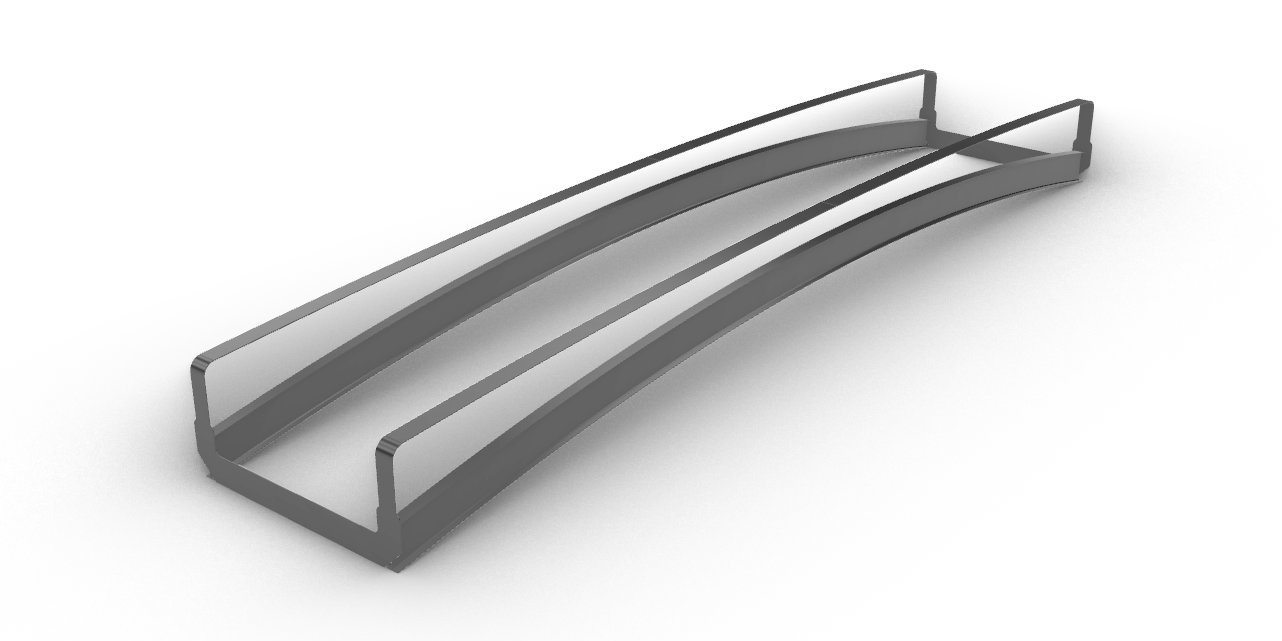
Steel substructure of the M15: two steel arches with railing
Steel substructure
Dimensions0-15 m
Made to measureadjustments without new engineering
Superstructurerecycled thermoplastic composite
Substructuresteel, coated
StandardsCUR 96 and Eurocode, with design assisted by testing
StructureFEM validation by Witteveen+Bos
Print time8 days

From waste stream to bridge. In five steps.

  1. Waste as raw material

    Circular in practice, not on paper. Plastic waste gets a second life as a bridge.

  2. Plastic+

    Reinforced into a material that carries loads outdoors for years, in all weathers.

  3. Adaptive design

    You choose length and width. Structure and print data follow automatically.

  4. Robotic printing

    A robot prints the superstructure in days instead of months, in a controlled and actively steered printing process.

  5. Steel substructure

    Steel arches provide strength and stiffness, and are fully recyclable after use.

3D printing. The heart of every bridge.

Large-format additive manufacturing (LFAM) runs day and night, seven days a week, without an operator. That makes it extremely scalable: more bridges means more printers, not more people.

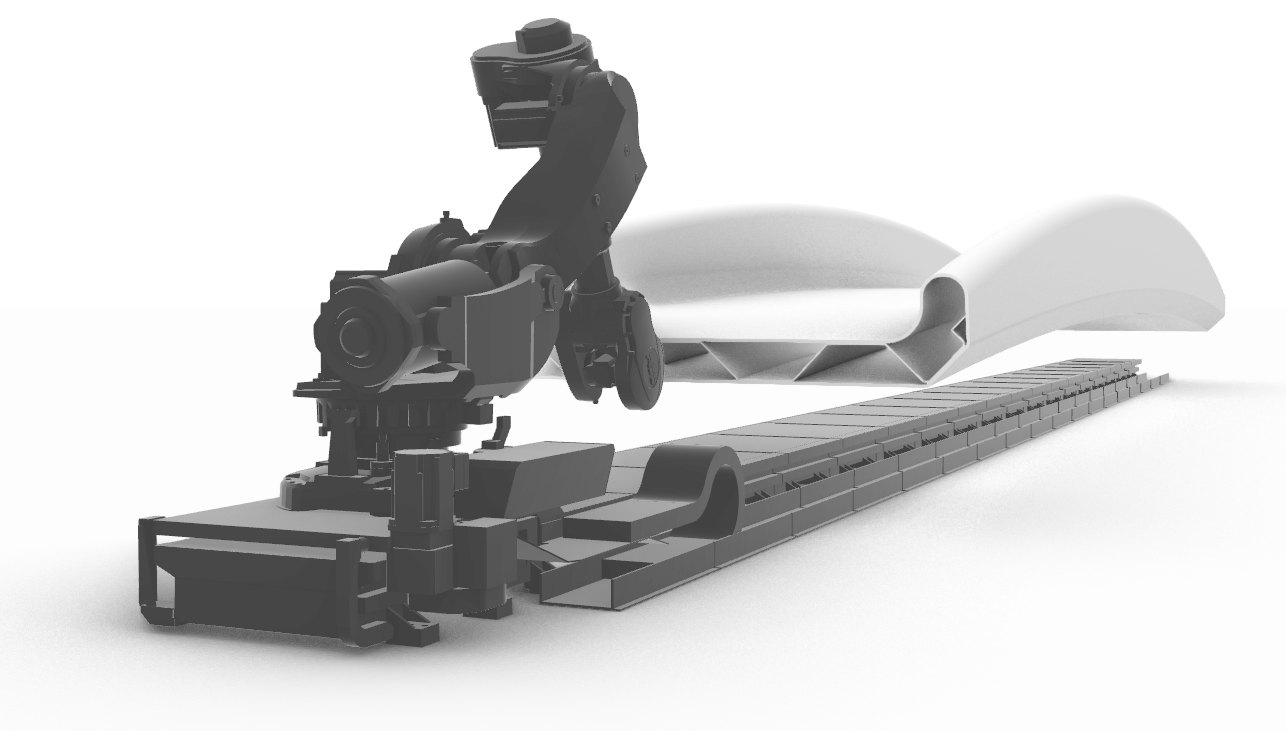
A certified product also requires a certified process. That is why we are building the MAGGAI 360: our own end-effector on an industrial 6-axis robot, which monitors the print and actively adjusts it. Every bridge gets the same perfect MAGGAI quality.

Render of the print cell: a 6-axis robot on a rail prints the superstructure of a bridge
  • Layer adhesionA thermal camera measures the layer temperature with high precision throughout the entire print.
  • Wall bondingA high-speed camera measures the wall thickness. We use that information to adjust the material flow.
  • Real-time controlAn embedded GPU processes the camera images and steers the printing process live.
  • Process monitoringExtruder temperatures, melt temperature, pressure and material feed are monitored continuously.

Impact. A bridge that becomes raw material again after use.

Raw material

Waste becomes a bridge

The superstructure is printed from recycled plastics. Material that has reached the end of its first life gets a second life in public space.

End of life

Reprocessable

Composites based on thermoplastics can be reused. This is a huge improvement over thermoset polyester composites.

Construction site

Short work on site

The bridge is made in the factory and installed ready to use. That means less disruption, fewer transport movements and far less nuisance.

LCA and EPD

Measurable in your tender

We are having a full LCA and Environmental Product Declaration (EPD) drawn up. This lets you weigh the environmental performance of the M15 in your procurement.

Pilot project

We are looking for a municipality! For the first MAGGAI bridge.

Aiming for 50% circularity by 2030? And is a cycle or pedestrian bridge on your agenda in the coming years? Then let us install a circular M15 together. We are happy to think along from the very first idea.

  • Full insight into design, calculations and acceptance tests
  • Installation together with an experienced civil contractor
  • A circular bridge that supports your sustainability goals
Schedule an introduction
Where we stand
  1. CompletedMaterial and design
  2. NowProduction cell and certification
  3. Next stepDemonstration bridge with a municipality